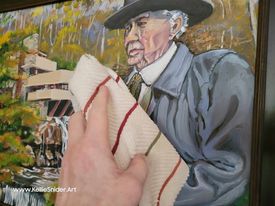

Caring for Your Original Oil Paintings
It’s such a gift to me when collectors choose me to create their next piece of art that I want to give you information on how to preserve oil paintings so that they last a lifetime. Oil paintings are valuable and, in some ways, delicate, requiring proper care to ensure they stay vibrant and beautiful for years to come. If you’ve ever watched a TV show where they revitalize an old painting you can see how much proper care throughout the life of a painting would have helped!
Here’s a guide to help you preserve your paintings and protect your investment, from choosing where to hang it to cleaning and maintaining it.
1. Choosing Where to Hang an Oil Painting
Selecting the right spot for your painting is important for its longevity.
- Avoid Direct Sunlight: Prolonged exposure to UV rays can cause colors to fade and the canvas to weaken over time. Hang your painting in a spot with indirect light or use UV-blocking window treatments if necessary.
- Keep Away from Heat Sources: Avoid placing paintings near radiators, fireplaces, or vents, as heat can cause the paint to dry out, crack, or warp.
- Avoid Humid Areas: Kitchens, bathrooms, or basements with high humidity can lead to mold growth or canvas warping. Aim to hang paintings in rooms with stable humidity levels (ideally between 40-60%).
- Use Proper Hardware: Secure your painting with appropriate hooks or wall anchors to ensure it’s safely supported. For heavier pieces, use two hooks to distribute the weight evenly.
- Leave Space for Airflow: Ensure that there’s a small gap between the back of the painting and the wall to allow air circulation, which helps prevent moisture buildup.
2. Handling Oil Paintings
Always handle your oil painting with care to avoid damaging the canvas or paint.
- Wear Gloves: Use clean cotton gloves when moving or adjusting your painting to prevent transferring oils from your hands to the surface and preserve oil paintings for the long run.
- Hold by the Frame: Handle the painting by its frame to avoid touching the painted surface directly, which could cause damage or leave fingerprints.
3. Protecting the Surface
Taking steps to protect the surface will help maintain the painting’s condition over time.
- Avoid Touching the Paint: Even light touches can leave marks or damage the paint over time. Always refrain from touching the canvas to preserve oil paintings.
- No Glass Over Oil Paintings: In most cases, it’s not recommended to put glass over an oil painting. Oil paintings need to breathe, and glass can trap moisture, leading to potential mold growth or paint deterioration. If you do decide to use glass, ensure that spacers are used to keep the glass from touching the paint and allow air circulation.
- Varnishing for Protection: If you want to protect the painting, applying a varnish after the paint has fully cured is the best option. Varnish helps protect the surface from dust, dirt, and UV light, while still allowing the painting to breathe.
4. Cleaning Your Oil Painting
Oil paintings can accumulate dust and dirt over time, but cleaning them requires care.
- Dust Regularly: Use a soft, dry brush (such as a makeup or artist’s brush) to gently remove dust from the surface. Brush in one direction and avoid pressing too hard.
- Avoid Liquids: Never use water, household cleaners, or chemicals to clean an oil painting, as moisture can damage the paint.
- Professional Cleaning for Heavy Grime: If the painting becomes significantly soiled or stained, take it to a professional art conservator rather than attempting to clean it yourself.
5. Protecting from Physical Damage
To prevent accidental damage, take steps to safeguard your painting from physical harm.
- Use a Dust Cover for the Back: If the painting doesn’t already have a dust cover on the back, consider adding one to prevent dirt and dust from accumulating inside the frame. Read my post on dust covers for more information about this.
- Avoid Leaning the Canvas: Never lean a canvas against other objects or walls, as this can cause pressure spots or damage. When storing, keep the painting upright and use protective padding.
- Keep Away from High-Traffic Areas: Hang your painting in a low-traffic area to avoid bumps, scratches, or accidental contact. These points will help preserve oil paintings.
6. Long-Term Care
Ensuring your painting remains in good condition over the long term requires attention to environmental conditions.
- Monitor Humidity and Temperature: Keep the room at a stable temperature (between 65°F and 75°F) and maintain humidity between 40-60%. Consider using a dehumidifier in particularly humid areas.
- Check for Damage Regularly: Inspect your painting every few months for any signs of cracking, flaking, or mold. If you notice damage, contact a professional conservator for advice on repair or restoration.
- Varnish Maintenance: If your painting is varnished, the varnish may eventually yellow or dull over time. A professional can remove the old varnish and apply a fresh layer to restore the painting’s appearance.
These instructions will help you keep your paintings fresh and vivid until they’re passed on to your great-great-great grandchildren, and beyond. These points will help preserve oil paintings over the long haul.
More information about appropriate care of oil paintings:
Damaged Oil Painting Repair (From the Oil Painting Doctor)
How to Repair an Oil Painting (From The Repair Shop, a British TV Show I love!)