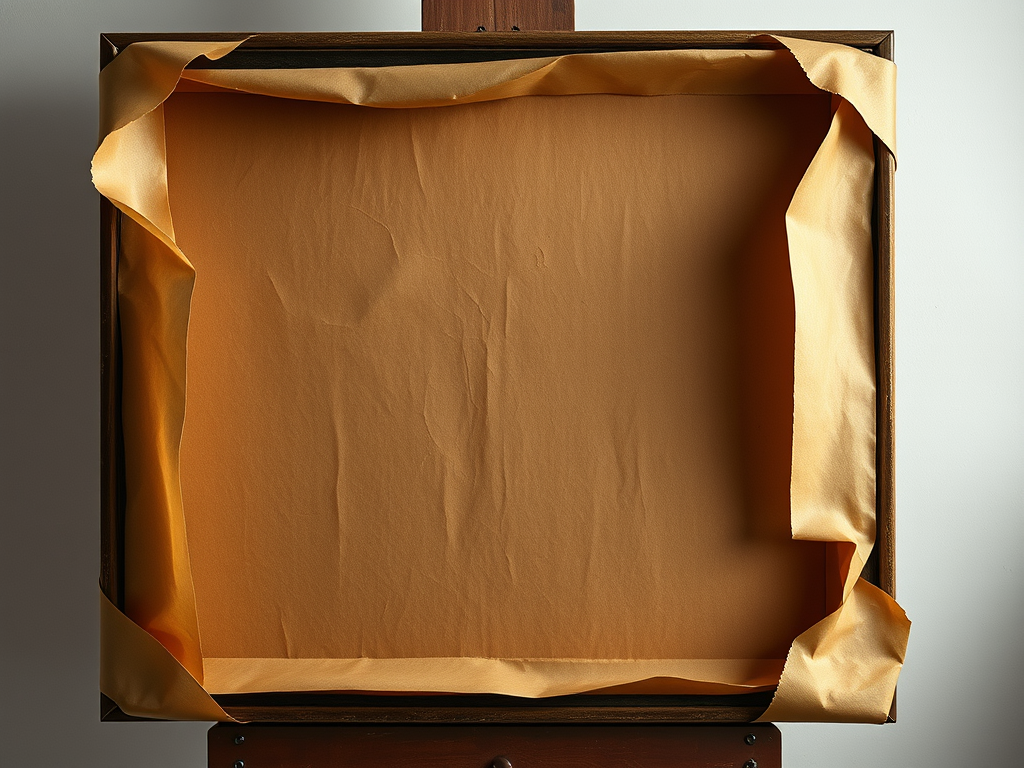
That sheet of kraft paper on the back of framed oil paintings.

Click to see a video by Tracy Reed about how to apply a dust cover to a painting
Let’s talk about something that often goes unnoticed but can play a pretty big role in how we care for art: dust covers. Some artists and framers swear by them, while others avoid them altogether. Like many things in the art world, there’s no one-size-fits-all answer. Today, I want to share some insights about dust covers and how they can (or maybe shouldn’t) be used with original oil paintings.
As a member of my Collector’s Guild, you are starting to understand that I like to pull back the curtain and give you a behind-the-scenes look at processes and the care involved in preserving art. So, let’s dive in and explore the dust cover debate.
Just an aside, I am linking to a video by Tracy Reed about applying dust covers. She is applying it to an acrylic painting. I’ll be talking about oil paintings. The application process is identical but there are some other considerations with oil paintings.
What Exactly Is a Dust Cover?
A dust cover is a piece of material—usually brown kraft paper but sometimes fabric—that’s attached to the back of a framed painting. Its job is to protect the back of the artwork from dust, insects, and environmental gunk that can sneak its way into your frame. It’s like the security guard of your artwork, quietly standing by, making sure nothing gets too close.
But here’s where it gets tricky: not all paintings benefit from having a dust cover, especially oil paintings. In fact, for some pieces, adding one might do more harm than good.
Why Some Artists (and Framers) Love Them
There’s a reason why dust covers are a go-to for many artists and framers. They offer a layer of protection from dust, dirt, and the occasional curious insect. If your painting is hanging in a busy environment—like a hallway where dust and dirt are part of the daily grind—a dust cover can help keep things cleaner and neater.
Another bonus? They give the back of your painting a polished, finished look. And for those of us who like our art to look as professional as possible, even from behind, that’s a win. You can also add a label, a signature, or a little note about the artwork to give it an even more personal touch.
The Other Side of the Coin: Why Some Artists Skip Dust Covers
Now, for oil paintings, things get a little more complicated. Oil paintings need to breathe. That’s right, even after they’re dry, oil paint continues to cure and adjust to its environment for weeks or even years. If you trap an oil painting behind a dust cover, especially in a humid or fluctuating climate, you could be inviting trouble in the form of moisture build-up, mold, or even warping.
And here’s the thing—oil paintings on stretched canvas weren’t traditionally framed with dust covers. So, if you’re a fan of letting art do its thing naturally, you might lean toward leaving the back open to air. This allows the painting to breathe and adjust to its surroundings without any interference.
When Dust Covers Might Make Sense
That said, dust covers aren’t always off the table. If you’ve got a painting that’s fully framed, especially one with a solid backing, a dust cover can still offer some protection without trapping too much moisture. Just make sure the painting is fully cured (which can take years for oils), and avoid areas where humidity is high or temperatures fluctuate often.
For example, if your artwork is hanging in a high-traffic area or a dusty room, a dust cover can help keep the back cleaner and safer from dirt or insects. But if you do use one, make sure you’re aware of the environment around it—stable humidity and temperature are your friends here.
My Take: The Beauty of Balance
As someone who believes in the power of observation and subtlety, I find that there’s a balance to be struck when it comes to protecting artwork. I don’t typically use dust covers on my oil paintings. I prefer to let the work breathe and evolve naturally, as oil paintings tend to do over time. But every piece is unique, and sometimes a dust cover can be the right choice if you’re framing it with specific protection in mind. Many framers are big fans of dust covers, so I’d advise you to talk with yours if you’re planning on having it professionally framed. That’s a profession unto itself!
Ultimately, the decision is yours. Just be sure to consider the environment where your artwork will live and whether that extra layer of protection is truly necessary—or if it’s better to let the art speak for itself, unencumbered.
Want to Know More?
If this post has you thinking about how to care for your own artwork, keep an eye out for my post on caring for original oil paintings. From choosing the right spot to cleaning techniques, I’ve got you covered!
As always, I’d love to hear your thoughts. does your artwork have a dust cover on the back? Does it seem helpful? Let’s talk art care, my friend.